

Create a High Converting Landing Page
Learn how to create a high converting landing page that drives results. Discover 10 proven strategies, design tips, and optimization techniques to boost conversions and grow your business effectively.
sri digital solutions
12/28/20254 min read
Introduction
Creating a landing page that turns traffic into clients is both an art and a science. Whether you’re selling a product, gathering email addresses, or encouraging sign-ups, a thoughtfully crafted landing page can significantly enhance your conversion rates and business growth. In this in-depth guide, we’ll delve into the key components and tactics you need to design a landing page that excels at conversion.
What Makes a Landing Page Highly Effective?
An effective landing page is specifically designed with a singular objective. Unlike a homepage that presents various navigation options, a successful landing page centers the visitor’s focus on one particular action. The most effective landing pages merge persuasive writing, eye-catching design, and strategically placed conversion elements to lead visitors smoothly toward that goal.
1. Create an Engaging Headline That Grabs Attention
Your headline is the first thing visitors notice, and you have just seconds to make a strong impression. An impactful headline conveys your value proposition clearly and speaks directly to the needs or pain points of your target audience. Utilize specific, benefit-driven language rather than vague terms. For instance, instead of saying "Excellent Marketing Software," opt for "Boost Your Email Open Rates by 40% in 30 Days."
2. Design With a Clear Visual Hierarchy
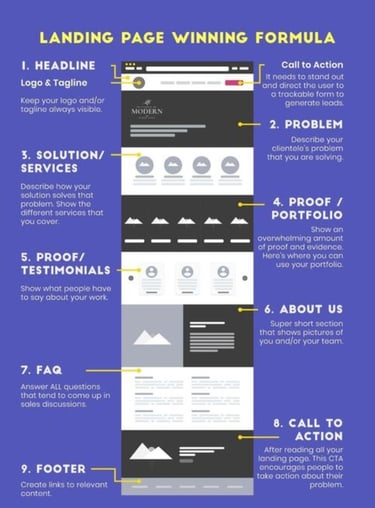
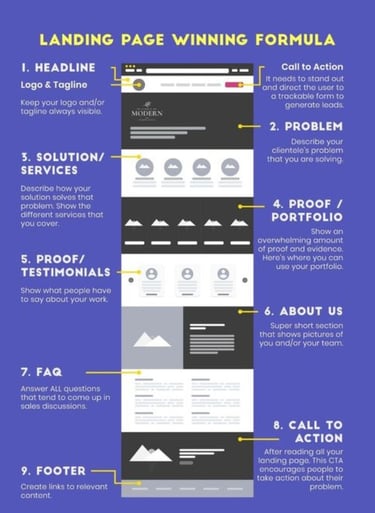
Visual hierarchy directs the visitors’ attention through your landing page logically. Start with your headline at the top, followed by supportive text, visual aids, and your call-to-action button. Employ contrasting colors to emphasize important elements, and include sufficient white space to avoid overwhelming visitors with too much information at once.
Your layout should be clean and professional, aligning with your brand's identity. Avoid cluttered designs that detract from your primary conversion objective. Keep in mind that simplicity often trumps complexity when it comes to landing page aesthetics.
3. Craft Benefit-Driven Content
Every line on your landing page should address the question: "What’s in it for me?" Emphasize benefits rather than features. Instead of outlining technical specifications, articulate how your product or service enhances your customer’s life, resolves their challenges, or helps them reach their objectives.
Utilize short paragraphs, bullet points, and subheadings to make your writing easily scannable. Most visitors won’t read everything, so simplify the process of understanding your main messages quickly. Incorporate social proof elements such as testimonials, statistics, or case studies to enhance credibility and trust.
4. Develop an Irresistible Call-to-Action
Your call-to-action button facilitates conversions, so it should stand out. Utilize action-oriented language that generates urgency or excitement. Avoid generic phrases like "Submit" or "Click Here" and instead use engaging alternatives like "Get My Free Guide," "Start My Trial," or "Claim Your Discount."
Ensure your CTA button is visually distinct with a contrasting color scheme that differentiates it from the rest of your landing page. The size also counts—your button should be noticeable but not overly large that it feels out of context. Consider including several CTAs across longer landing pages to engage visitors at various points in their decision-making.
5. Optimize Your Forms for Maximum Conversion
If your landing page contains a form, keep it as straightforward as possible. Each additional field adds friction and decreases conversion rates. Only request information that is absolutely necessary at this step. You can gather more details later in your customer’s journey.
Provide clear labels, offer helpful error notifications, and consider including privacy reassurances near the form. Many users are increasingly wary about data security, so a straightforward statement concerning how you’ll safeguard their information can enhance trust and conversions.
6. Utilize High-Quality Visual Content
Images and videos can relay your message quicker than text alone. Incorporate real, high-quality visuals that display your product in use or illustrate the advantages customers will gain. Steer clear of generic stock images that add no real value to your message.
Video content is especially effective for landing pages. A brief explanatory video can significantly boost conversions by aiding visitors in quickly grasping your offerings. Just ensure your page loads rapidly despite the media—slow loading times can kill conversions.
7. Foster Trust Through Social Proof
People are more influenced by other individuals than by marketing messages.
Position social proof close to your call-to-action buttons to provide hesitant visitors with that final nudge toward conversion. Real names, images, and specific details enhance the credibility and effectiveness of testimonials.
8. Ensure Mobile Compatibility
Over half of web traffic originates from mobile devices, so your landing page must function smoothly on smartphones and tablets. Test your page on various devices and screen sizes to confirm buttons are easily tappable, text is legible without zooming, and forms are simple to complete on smaller displays.
Mobile optimization goes beyond just resizing your desktop design—it frequently requires reevaluating your layout and prioritizing elements differently for compact screens. Quick loading speeds are even more vital on mobile, where users have less patience and often slower connections.
9. Minimize Distractions and Eliminate Navigation
Unlike your main website, your landing page should feature little to no navigation menus. Every link you introduce presents an opportunity for visitors to exit without converting. Remove header navigation, sidebar links, and footer clutter that may divert visitors from your conversion aim.
10. Test, Evaluate, and Continuously Optimize
Crafting a high converting landing page is not a one-off task—it’s a continuous journey. Use A/B testing to evaluate different headlines, visuals, copy, button colors, and layouts. Minor adjustments can sometimes lead to significant enhancements in conversion rates.
Conclusion
Creating a successfully converting landing page necessitates careful consideration of various components working in concert. By applying these ten proven strategies, you will develop a landing page that not just attracts visitors but also converts them into customers, subscribers, or leads. Remember that optimization is an ongoing process—keep experimenting, learning, and refining your approach based on authentic data and customer feedback. With determination and strategic enhancements, your landing page can transform into a vital asset that drives consistent business expansion.
Phone
challagundlasrinivasarao77@gmail.com
+91-8317635506
© 2025. All rights reserved.
Disclaimer
Sri Digital Solutions provides digital marketing services to support business growth. We do not guarantee specific results as they may vary based on industry, competition, and marketing budget.
Privacy Policy
We collect personal information (name, phone number, email) only to deliver our services and communicate with clients.
We do not sell or share your data with any third party except for required service integrations like analytics and ads.
Terms & Conditions
By using our website or services, you agree to follow our service guidelines, payment terms, communication policies, and confidentiality requirements.