


AI Tools Transforming SEO Strategies
Discover how AI tools are revolutionizing SEO strategies. Learn to leverage artificial intelligence for keyword research, content optimization, technical SEO, and competitive analysis to boost your search rankings effectively.
sridigital solutions
1/4/20264 min read
Introduction
The field of SEO has experienced a significant shift due to the integration of artificial intelligence. AI technologies are no longer just visions of the future; they are vital elements of contemporary SEO plans, allowing marketers and businesses to achieve results that previously seemed unattainable through manual efforts alone.
The AI Revolution in SEO
Search engines are becoming more advanced, with Google's algorithms now fueled by sophisticated AI technologies like RankBrain and BERT. This advancement requires SEO specialists to adapt by employing AI-driven tools to comprehend and respond to these smart ranking algorithms. AI tools can process extensive data in seconds, uncover trends that may elude human analysts, and deliver actionable insights that can significantly enhance your website's visibility.
The strength of AI in SEO is its capacity to analyze and interpret data on a large scale. While a person might take hours reviewing keyword trends or competitor tactics, AI can carry out these analyses in mere minutes and reveal deeper insights. This capability not only conserves time but also introduces new chances for optimization that were previously deemed unfeasible.
Reimagined Keyword Research:
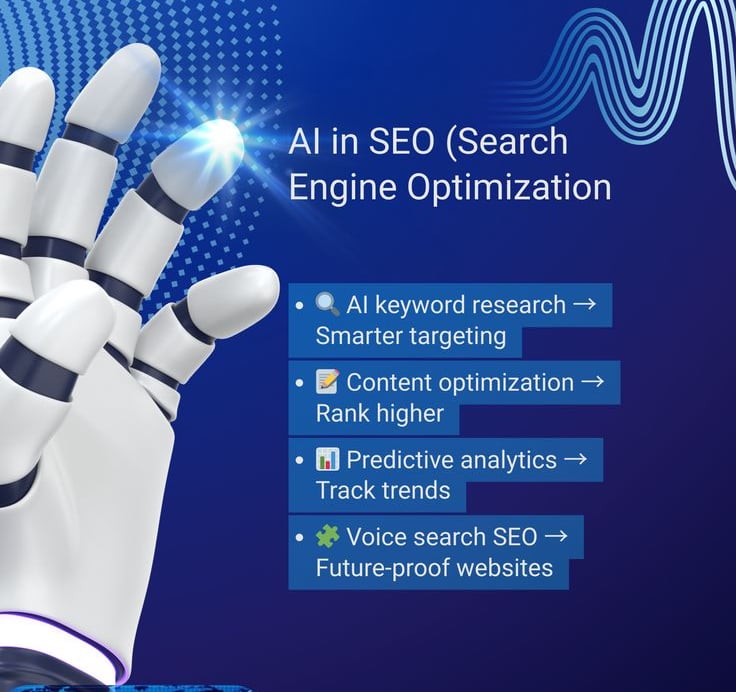
Historically, keyword research involved the manual generation of ideas and verifying their search frequencies. AI tools have revolutionized this task by understanding user intent, semantic connections, and emerging patterns with exceptional precision. These intelligent solutions can spot long-tail keywords that your rivals have yet to uncover, predict trending keywords, and cluster related terms into topics that align with search engine comprehension of content.
AI-driven keyword tools transcend basic volume statistics. They evaluate competition, measure ranking challenges with accuracy, and even forecast the traffic you could gain from targeting particular keywords. Some sophisticated platforms utilize natural language processing to grasp the context behind queries, aiding you in generating content that resonates with user intent instead of simply packing keywords into your pages.
Content Creation and Optimization:
Content remains a priority in SEO; however, AI has altered how we create and enhance it. AI writing assistants can produce initial drafts, suggest pertinent topics based on what is currently trending, and pinpoint gaps in your existing material. More importantly, AI resources can analyze top-ranking content for your desired keywords and provide precise recommendations on word count, readability, semantic keywords to include, and effective content structure.
These tools do not replace human creativity but rather enhance it. A proficient content creator using AI resources can generate more content with improved optimization in a shorter time. AI can propose heading structures that align with user intent, recommend chances for internal linking, and even forecast how well a piece of content might perform before publishing it.
Technical SEO Automation:
Technical SEO includes many repetitive tasks that are well-suited for AI automation. AI-powered crawlers can thoroughly examine your website, identifying broken links, duplicate content, slow-loading pages, and mobile usability problems much more efficiently than manual assessments. These tools not only identify issues but also prioritize them based on their potential influence on rankings and frequently offer specific solutions.
AI tools can continuously track your site's technical health, notifying you of concerns as they occur instead of waiting for monthly checks. They can assess your site's layout and suggest enhancements to your internal linking structure, recognize abandoned pages that search engines may struggle to locate, and even anticipate how modifications to your site architecture could impact your rankings. This degree of automated assessment is priceless for extensive websites with innumerable pages.
Competitive Intelligence:
Comprehending what competitors do well is essential for SEO success. AI tools can examine competitor websites in depth and on a scale that would be impossible manually. They can uncover which keywords your competitors rank for that you do not, unveil their link-building techniques, evaluate their content efficiency, and even anticipate their upcoming strategies based on past trends.
Sophisticated AI platforms can track dozens or even hundreds of competitors simultaneously, observing their ranking shifts, content release patterns, and backlink acquisition. This insight allows you to uncover missed opportunities while learning from their achievements. Some tools integrate machine learning to recognize which strategies of your competitors are most successful, guiding you on which methods to implement.
Predictive Analytics and Performance Forecasting:
A standout application of AI in SEO is predictive analytics. Machine learning algorithms can scrutinize historical data to anticipate future trends, forecast the impact of algorithm adjustments, and estimate the possible outcomes of various SEO tactics before committing resources. This capability shifts SEO from a reactive approach to a proactive strategy.
AI tools can simulate how modifications to your site may influence rankings, foretell seasonal trends in your sector, and detect emerging...
Personalization and User Experience:
Contemporary SEO is not solely about satisfying search engines; it focuses on providing outstanding user experiences. AI tools can evaluate user activity on your site, pinpointing trends that suggest confusion, annoyance, or satisfaction. These insights enable you to optimize not just for rankings but also for conversions and user engagement.
AI-enhanced heat mapping and session recording tools can reveal how users interact with your content, which sections they engage with, and where their attention wanes. Some advanced platforms utilize this information to propose personalized content suggestions, ensuring visitors view the most relevant data based on their actions and objectives.
Integrating AI into Your SEO Strategy:
Beginning your journey with AI tools doesn’t necessitate a total overhaul of your SEO strategy. Start by identifying your most significant bottlenecks and time-consuming processes, then investigate AI tools that specifically target those issues. Whether it's optimizing content, conducting technical audits, or analyzing competitors, an AI solution likely exists to assist.
The essential point is to remember that AI tools are augmentations, not substitutes for strategic thought and creativity. The most successful SEO methods merge AI’s analytical capabilities with human insight, creativity, and knowledge of brand identity and business objectives. As these tools progress, those adept at leveraging them efficiently will possess a significant competitive advantage in the ever-evolving landscape of search engine optimization.
Phone
challagundlasrinivasarao77@gmail.com
+91-8317635506
© 2025. All rights reserved.
Disclaimer
Sri Digital Solutions provides digital marketing services to support business growth. We do not guarantee specific results as they may vary based on industry, competition, and marketing budget.
Privacy Policy
We collect personal information (name, phone number, email) only to deliver our services and communicate with clients.
We do not sell or share your data with any third party except for required service integrations like analytics and ads.
Terms & Conditions
By using our website or services, you agree to follow our service guidelines, payment terms, communication policies, and confidentiality requirements.