


Essential Cybersecurity: Protect Your Digital Assets
Discover what cybersecurity is and explore 9 essential types of cyber protection to safeguard your digital assets from threats in 2026. Learn best practices for effective defense against cyber threats.
sridigital solutions
2/13/20264 min read
Introduction
In modern day interconnected virtual world, cybersecurity has end up greater essential than ever. With cyber attacks occurring every 39 seconds and data breaches costing businesses millions of dollars annually, understanding cybersecurity is essential for individuals and organizations alike.
Understanding Cybersecurity: The Basics
Cybersecurity refers to the practice of protecting computer systems, networks, devices, and sensitive data from digital attacks, unauthorized access, theft, or damage. It encompasses a wide range of technologies, processes, and practices designed to create a defense system against cybercriminals and malicious actors who seek to exploit vulnerabilities in digital infrastructure.
The significance of cybersecurity can't be overstated. As our lives become increasingly digital—from online banking and shopping to remote work and cloud storage—the potential impact Of safety breaches grows exponentially. Cybersecurity protects not just data, but also privacy, financial assets, intellectual property, and even national security.
The 9 Essential Types of Cybersecurity
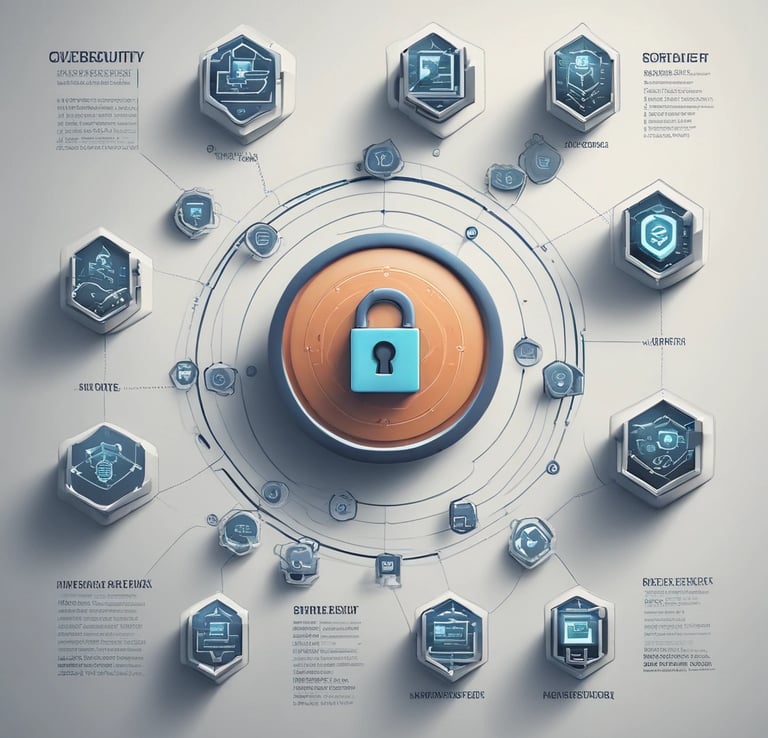
Understanding the different types of cybersecurity helps organizations build comprehensive protection strategies. Here are the principle categories:
1. Network Security
Network safety specializes in shielding the integrity and usefulness of networks and data. It involves implementing both hardware and software solutions to prevent unauthorized access, misuse, or modification of network resources. Common equipment consist of firewalls, intrusion detection systems (IDS), and digital non-public networks (VPNs).
2. Application Security
This domain ensures that software applications are designed, developed, and maintained with security in mind. Application security involves identifying and fixing vulnerabilities in code, implementing secure authentication methods, and regularly updating software to patch security holes. It's particularly crucial in the age of mobile apps and web-based services.
3. Information Security (Data Security)
Information security protects the confidentiality, integrity, and availability of data—both in storage and during transmission. This includes encryption, data loss prevention (DLP) tools, and secure backup solutions. With regulations like GDPR and CCPA, data security has become a legal requirement for many organizations.
4. Cloud Security
As businesses migrate to cloud platforms like AWS, Azure, and Google Cloud, cloud security has emerged as a critical specialization. It addresses unique challenges in securing data and applications hosted in cloud environments, including shared responsibility models, API security, And cloud get admission to protection brokers (CASBs).
5. Endpoint Security
Endpoint security protects individual devices—computers, smartphones, tablets, and IoT devices—that connect to corporate networks. With remote work becoming standard, endpoint protection platforms (EPP) and endpoint detection and response (EDR) solutions have become vital for stopping malware infections and unauthorized access.
6. Identity and Access Management (IAM)
IAM ensures that the right people have appropriate access to resources at the right times. This includes multi-factor authentication (MFA), single sign-on (SSO), privileged access management (PAM), and role-based access controls. IAM is fundamental to preventing insider threats and credential-based attacks.
7. Operational Security (OpSec)
Operational safety includes the methods and choices for coping with and shielding information assets. It includes determining who has access to information, how data is shared, and what procedures exist for managing security incidents. OpSec emphasizes the human element of cybersecurity.
8. Disaster Recovery and Business Continuity
This type focuses on how organizations respond to cybersecurity incidents and maintain operations during and after attacks. It includes backup strategies, incident response plans, and recovery procedures to minimize downtime and data loss when breaches occur.
9. Critical Infrastructure Security
Critical infrastructure security protects systems essential to society, such as power grids, water treatment facilities, transportation networks, and healthcare systems. These sectors face unique threats from state-sponsored actors and require specialized security approaches.
Common Cybersecurity Threats in 2026
Understanding threats is key to effective protection. The maximum normal cybersecurity threats include:
Ransomware: Malicious software program that encrypts statistics and needs charge for decryption
Phishing: Fraudulent communications designed to steal credentials or sensitive information
Malware: Viruses, trojans, spyware, and different malicious software
DDoS Attacks: Overwhelming systems with traffic to cause service disruptions
Zero-Day Exploits: Attacks concentrated on formerly unknown vulnerabilities
Insider Threats: Security risks from employees or authorized users
Supply Chain Attacks: Compromising third-party vendors to access target organizations
Cybersecurity Best Practices
Implementing robust cybersecurity requires a multi-layered approach:
Regular Software Updates: Keep all systems and applications patched with the latest security updates
Strong Password Policies: Enforce complicated passwords and multi-element authentication
Employee Training: Educate staff about phishing, social engineering, and security protocols
Data Encryption: Protect touchy facts each at relaxation and in transit
Regular Backups: Maintain secure, offline backups of crucial data
Network Segmentation: Divide networks to incorporate capability breaches
Security Audits: Conduct regular assessments and penetration testing
Incident Response Plan: Prepare documented procedures for security events
The Future of Cybersecurity
As generation evolves, so do cyber threats. Artificial intelligence and machine learning are being leveraged both by defenders to detect anomalies and by attackers to create more sophisticated threats. Quantum computing poses future challenges to current encryption methods, while IoT devices continue to expand the attack surface.
Organizations must adopt a proactive, adaptive approach to cybersecurity, investing in both technology and human expertise to stay ahead of emerging threats.
Conclusion
Cybersecurity is not a one-time investment but an ongoing process of protection, detection, and response. Whether you're an individual user, small business, or large enterprise, understanding the fundamentals of cybersecurity and implementing appropriate safeguards is essential for thriving in our digital age. By recognizing the various types of cybersecurity and following best practices, you can significantly reduce your risk of falling victim to cyber attacks and protect your valuable digital assets.
Phone
challagundlasrinivasarao77@gmail.com
+91-8317635506
© 2025. All rights reserved.
Disclaimer
Sri Digital Solutions provides digital marketing services to support business growth. We do not guarantee specific results as they may vary based on industry, competition, and marketing budget.
Privacy Policy
We collect personal information (name, phone number, email) only to deliver our services and communicate with clients.
We do not sell or share your data with any third party except for required service integrations like analytics and ads.
Terms & Conditions
By using our website or services, you agree to follow our service guidelines, payment terms, communication policies, and confidentiality requirements.